

GoHighLevel Alternatives for Contractors: When Custom Automation Makes More Sense
 Miguel Umbac· SEO, Web Development & Automation
GoHighLevel costs more than its $97 plan once texts, calls and AI are added. Compare 7 alternatives for contractors and see when custom makes more sense.
Field service apps, simple CRMs, texting tools and custom lead systems are the best GoHighLevel alternatives for contractors. Jobber and Housecall Pro run jobs, HubSpot and Zoho track leads, and Podium handles texts and reviews. ServiceTitan suits bigger shops, and a custom system works with tools you already have. Which one fits depends on the jobs you use GoHighLevel for.
I build custom lead systems, which is option 7 on this list, so keep that in mind as you read. My studio has no affiliate or partner deal with HighLevel or any tool here, and this post has no affiliate links. GoHighLevel training is part of my background too, completed in January 2026. The cost and setup details below come from working inside the platform.
Key Takeaways
- GoHighLevel starts at $97 a month, but texts, calls, emails and AI are billed on top of the plan.
- Field service apps like Jobber and Housecall Pro add scheduling and invoicing, which GoHighLevel isn't built around.
- A plain CRM fits owners who want a pipeline and email but don't need job dispatch.
- Custom automation makes the most sense when you already have software you like and only need the lead handling.
- Before you switch, confirm who owns your phone number and plan your texting registration, or your text alerts can stop.
What GoHighLevel Is and What Contractors Use It For
GoHighLevel, also called HighLevel, is an all-in-one marketing platform with a CRM, texting, email, funnels and automation in one login. A CRM (customer relationship management system) is the list of every lead and customer, with notes on where each one stands. HighLevel built the product for marketing agencies, which is why its plans talk about sub-accounts and white labeling.
A sub-account is one business inside an agency's HighLevel account. White labeling means the agency puts its own brand on the software and resells it. Many contractors never buy GoHighLevel directly, and instead pay an agency that runs their business as a sub-account.
Five parts of the platform get most of the use, and they become the yardstick for every tool below:
- Missed-call text-back: an automatic text to anyone whose call you didn't answer.
- Review requests: a text or email asking a happy customer for a Google review.
- Two-way texting and email from one inbox.
- Online booking forms and calendars.
- A pipeline, which is a board showing each lead's stage, from new to booked to paid.

Each of those five jobs runs inside a two-layer monthly bill: a flat plan fee, plus usage charges for texts, calls, emails and AI. On HighLevel's pricing page, the Starter plan is $97 a month or $970 a year, with 3 sub-accounts and unlimited contacts and users. The Unlimited plan is $297 a month, and the top agency plan is $497 a month. No free plan is listed, but there is a 14-day trial, and the page says usage fees can apply during it.
Starter is the plan a single business needs. Both upper plans add the tools an agency uses to resell the software to many clients. Bills differ most on usage, which comes next.
The Usage Fees on Top of the Plan
Usage is billed from a prepaid wallet that refills from your card. These rates come from HighLevel's pricing guide and its phone rate guide, as of November 2026:
- Local phone number: $1.15 a month. Toll-free: $2.15 a month.
- Texts: $0.00747 per segment, sent or received. A segment is up to 160 characters.
- Carrier fees per text: about $0.0025 to $0.01, set by the customer's mobile carrier.
- Calls: $0.0166 a minute outgoing and $0.01165 a minute incoming.
- Email: $0.675 per 1,000 sent.
- Texting registration, the sign-up U.S. carriers require for business texting: a one-time $22.50 fee, then $1.50 to $10.50 a month for a low-volume campaign.
- AI Employee: $50 a month for the Growth plan or $97 for Unlimited, per business.
- Premium workflow steps: $0.01 per run.
Incoming texts cost the same as outgoing ones, so a busy text inbox adds up both ways. HighLevel says its phone pricing matches Twilio's, the phone company it runs on.
A Worked Monthly Example
Here is one contractor on Starter, with numbers I picked to show the math. Swap in your own volumes.
- Starter plan: $97.00
- One local number: $1.15
- 1,200 texts sent and 800 received: $14.94
- Carrier fees on those texts: $6.20 to $14.00
- 400 minutes of outgoing calls: $6.64
- 600 minutes of incoming calls: $6.99
- 2,000 emails: $1.35
- Low-volume texting campaign: $1.50 to $10.50
- Total: about $136 to $153 a month, before AI
Add the $50 AI Growth plan and the total is about $186 to $203 a month. If an agency sells you GoHighLevel, you pay the agency's price instead. On the $497 plan, HighLevel lets agencies rebill usage with a markup, so ask for a line-item bill.

Owners give me four reasons for looking at GoHighLevel alternatives, and a bill that moves every month is only one of them:
- It's built for agencies. Funnels, courses and reseller settings sit beside the five jobs a contractor uses.
- The bill changes. Usage charges rise and fall with call and text volume.
- It doesn't run the job. GoHighLevel has no dispatch board, crew schedule or job costing like field service apps have.
- The account isn't theirs. On an agency account, the agency controls the login, the workflows and often the phone number.
Account ownership causes the most trouble when someone leaves, so it gets its own section further down. First, here are the tools worth comparing.
The 7 Best GoHighLevel Alternatives for Contractors
These GoHighLevel alternatives were picked for local service businesses like plumbers and HVAC companies. Every price is as of November 2026, from each company's own pricing page. Check that page before you buy, because prices change often.
1. Jobber: Best for Small Crews That Quote and Invoice
Jobber is field service software for scheduling, quotes, invoices and payments. On Jobber's pricing page, the one-user Core plan is $29 a month billed yearly or $49 month to month. Two-way texting starts on the Grow plan, which is $149 a month billed yearly for one user.
Moving to Jobber covers booking, customer texting on Grow and a light pipeline. It won't build websites or funnels the way GoHighLevel does. Watch the add-ons, too: the Marketing Suite is $99 a month and each extra user is $29 a month.
2. Housecall Pro: Best for Home Service Teams That Want Reviews Built In
Housecall Pro is home service software for HVAC, plumbing, electrical and cleaning companies. On Housecall Pro's pricing page, Basic is $59 a month billed yearly or $79 monthly for one user. Essentials is $149 yearly or $189 monthly for five users. Review management is listed on every plan, and the 14-day trial needs no credit card.
Review requests, booking and the customer list carry over well from GoHighLevel. Marketing automation and funnels are thin by comparison.
3. ServiceTitan: Best for Multi-Truck Shops With Dispatchers
ServiceTitan is a large field service platform for shops with office staff, dispatchers and many technicians. Its pricing page lists three packages, Starter, Essentials and The Works, priced per technician. You get a number by booking a demo, since no prices are posted.
Call booking, customer records and reporting go well past what GoHighLevel does for a contractor. The catch is the starting cost, since a one-truck business is likely paying for more than it uses.
4. HubSpot: Best for Owners Who Want a Clean Pipeline
HubSpot is a CRM with a free tier and paid upgrades. On HubSpot's CRM pricing page, the free plan covers up to 2 users, and Starter lists at $20 per seat a month. Starter includes 500 calling minutes and one HubSpot phone number. The page doesn't say texting is included.
For the pipeline, email and contact records, HubSpot is a close match. Job scheduling and field invoicing are missing, and so is texting on the plans shown.
5. Zoho CRM: Best for Tight Budgets With a Few Users
Zoho CRM is a low-cost CRM with a free edition for 3 users. Its pricing page shows paid prices through a calculator and says yearly plans save up to 34%. Calling and email tools are listed, but texting isn't mentioned.
Both the pipeline and your contact records move over cleanly. Texting and reviews need other tools added on.
6. Podium: Best for Shops That Run on Texts and Reviews
Podium is a messaging tool that puts texts, calls and web chat in one inbox, with review requests and payments. Its pricing page has no posted prices, so you request a quote. Review requests go out by text, according to the page, for Google and other sites.
Inbox and review requests are where Podium overlaps most with GoHighLevel, along with text marketing. It won't schedule, dispatch or invoice field work.
7. A Custom Lead System: Best When You Like the Software You Have
Option 7 is a custom lead system: a small set of automations built for one business on tools it already pays for. A form fill or missed call triggers a text to your phone, and the lead lands in your CRM or job software. You own the number and the data. How it compares with GoHighLevel comes right after the feature check below.
Missed-call text-back, lead alerts and lead tracking are the parts it replaces. Invoicing and dispatch stay in your job software, and someone has to maintain the automations.

Matching each tool against the five jobs from the start of this post is the fastest way to compare them. This list uses only what each company's pricing page states.
- Missed-call text-back: built into GoHighLevel. Podium and custom systems handle it. Jobber and Housecall Pro list texting features, so check your plan.
- Review requests: GoHighLevel, Housecall Pro (all plans) and Podium. Jobber sells Reviews as an add-on. HubSpot and Zoho need another tool.
- Two-way texting: GoHighLevel, Jobber Grow and Plus, Podium and custom systems. HubSpot and Zoho don't list it.
- Online booking: GoHighLevel, Jobber (all plans), Housecall Pro (all plans) and ServiceTitan.
- Invoicing: Jobber, Housecall Pro and ServiceTitan. GoHighLevel, HubSpot and Zoho aren't field invoicing tools.
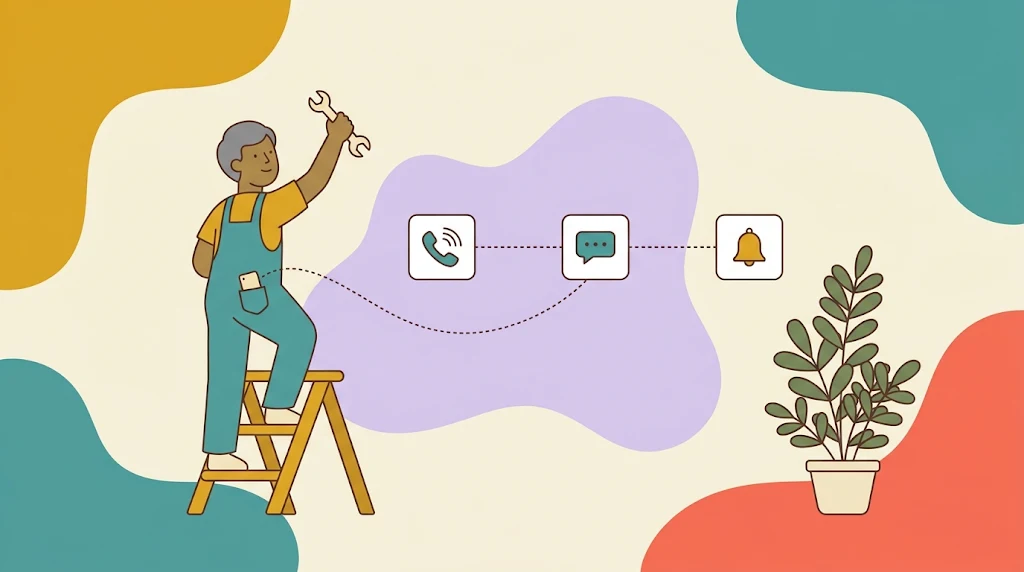
Most platforms sell missed-call text-back as a feature; here's what it looks like built to fit one business. A call goes unanswered, and within seconds the caller gets a text with your business name. The text asks what they need and says when you'll call back. You get the same alert, so the lead doesn't sit in an inbox you check twice a day.
That built-to-fit text-back leads to the bigger question of GoHighLevel vs custom CRM. The answer depends on whether you need a whole platform or only the lead handling. A platform gives you every feature for one monthly fee, plus usage. Custom gives you only the steps your business runs, inside software you already use.
When a platform doesn't fit, I build custom automation for contractors on the tools you already use. Custom tends to make more sense in these cases:
- You already run Jobber, Housecall Pro or another job app and like it.
- You use two or three GoHighLevel features and pay for the rest.
- You want your phone number, texting registration and lead data in accounts you control.
- Your process has a step no platform handles well, like routing emergency calls to whoever is on call.
Custom makes less sense if you want one login for everything, or if nobody will maintain the automations.

Running costs remain with custom, even though the platform fee goes away. You keep paying for the job or CRM software you already use. Texts and calls still cost roughly the phone rates covered earlier.
Three other costs are easy to forget:
- Texting registration: carriers charge a one-time fee and a monthly campaign fee, the same as inside GoHighLevel.
- The build: someone has to set up the triggers, alerts and CRM sync once.
- Upkeep: when your form, phone provider or job software changes, the automation needs a check.
Cost usually favors custom when you'd otherwise pay for a full platform and use a small part of it. The math flips when you'd need to rebuild most of what the platform does.
The Custom Version, Step by Step
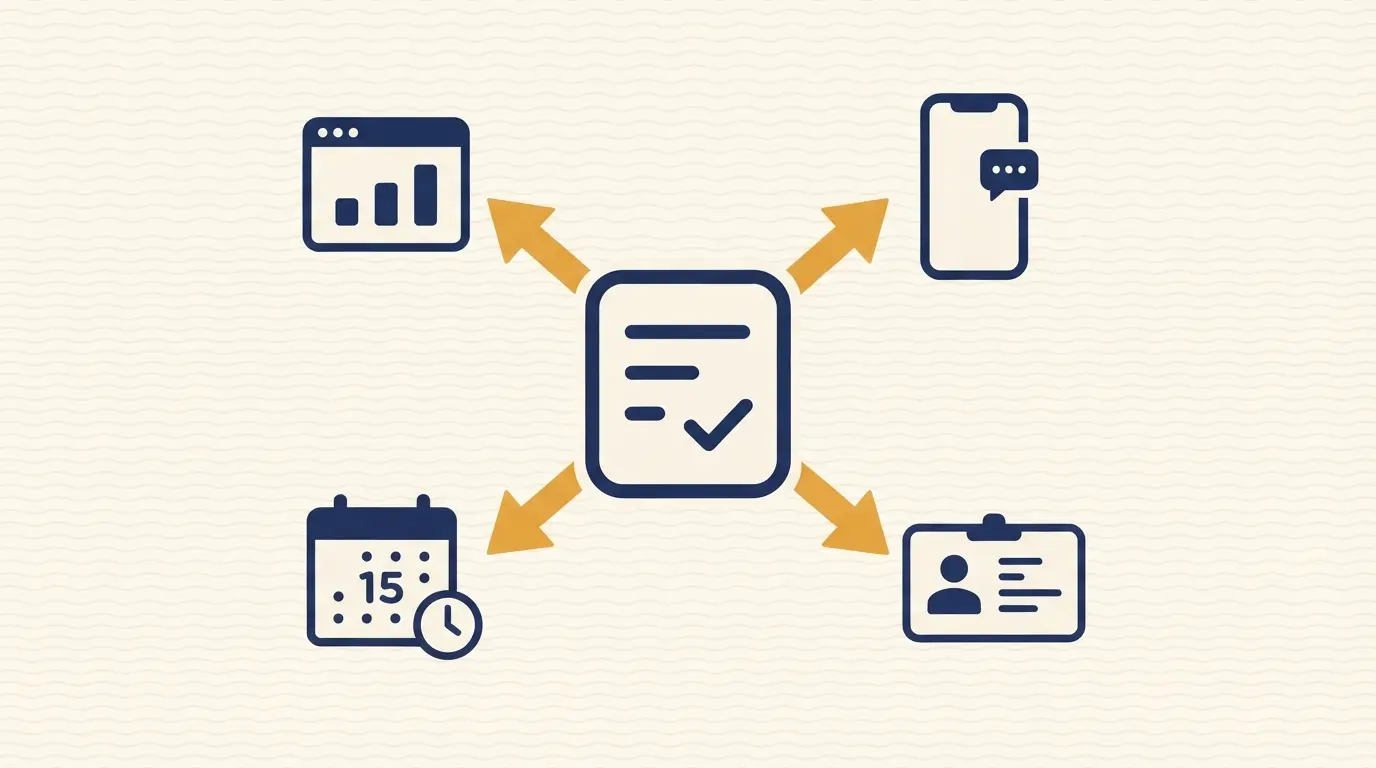
Every lead triggers the same four steps in a custom system. Bots and duplicate form fills get filtered out first. Then four things happen at once:
- 1Your phone gets a text with the customer's name, number and request.
- 2A new lead is created in your CRM with the same details.
- 3A realistic appointment window is held on your calendar.
- 4The lead shows up in your client portal, tagged with its source.
The custom version is shown step by step in how a lead goes from form submission to a text on your phone. Since the steps run side by side, one failed step doesn't block the others.

Your size and the work you do most decide which GoHighLevel alternative for a service business fits. Find the case closest to yours:
- Solo operator who mostly quotes and invoices: Jobber Core, or Housecall Pro Basic if reviews matter more.
- Crew of 3 to 10 with someone booking jobs: Housecall Pro Essentials or Jobber Grow.
- Shop with dispatchers and many trucks: ask ServiceTitan for a demo and a quote.
- Business that runs on texts and reviews: Podium, or a custom text-back added to your current software.
- Owner who wants a pipeline and email only: HubSpot's free plan or Zoho CRM.
- Business on an agency account it doesn't control: get the number and data into your name first, then pick from this list.
When to Stay on GoHighLevel
Staying on GoHighLevel is still the right call for some contractors, because switching takes work and can cost you leads during the move. Keep it if one of these fits you:
- Your automations work, your texting registration is approved, and the monthly bill is predictable.
- You run more than one business or brand, since one Starter account can hold several.
- Your agency manages the account well and gives you a line-item usage bill.
None of these fit? Then plan the move so no leads slip through.
How to Switch Without Losing Leads
Switching off GoHighLevel safely takes six steps, done in order. Skipping the phone and texting steps is how leads get lost.
- 1Export your contacts, pipeline stages and notes to a spreadsheet.
- 2Find out who holds your phone number: you, your agency or HighLevel's phone system. HighLevel's migration guide says number moves out of its phone system run through a HighLevel Support ticket.
- 3Set up texting registration on the new system before you turn off the old one.
- 4Replace every review request link in your texts, emails and invoices.
- 5Rebuild your missed-call text-back and test it from a phone that isn't yours.
- 6Run both systems side by side for a short overlap, then cancel.
Texting registration is the step most owners don't know about. Twilio's A2P 10DLC guide says anyone sending texts from software to U.S. numbers over a regular 10-digit number must register. A2P 10DLC is the carriers' name for that registration. Unregistered texts get blocked, so an unplanned switch can silently stop your alerts.
Phone numbers move by porting, the carrier process for taking a number to a new provider. Twilio's port-out help says you start with the new carrier and keep the number active until the move is done. A gap in your text-back during the switch can cost you booked jobs, as covered in why replying in 5 minutes beats 30.

Ownership is the problem I see most often. A contractor brings me an agency-built account and wants to leave. Then we find the phone number sits in the agency's HighLevel phone system, and the texting registration is under the agency's setup.
Workflows nobody remembers building come second. A review request fires on a trigger from an old campaign, or two automations text the same lead. Before I rebuild anything, I list every workflow that has sent a message in the past month. Usually only a few matter, and those are what I rebuild.
Hidden usage is the third. When an agency charges one flat fee, the owner can't see what texts and calls cost. Once we pull the usage log, the decision to stay or switch gets a lot easier.

Is there a free version of GoHighLevel?
Only small pieces are free. HighLevel's pricing guide lists a free Workflow Pro tier with 100 lifetime runs, and AI Assistants are free on agency plans. The software itself needs a paid plan once the trial ends, so set a reminder to cancel before day 14 if you're only testing it.
Which is better for a contractor, HubSpot or GoHighLevel?
Pricing models split them. GoHighLevel includes unlimited users on every plan, while HubSpot charges per seat after the free plan's 2 users. A crew with several office staff can come out ahead on GoHighLevel. Solo owners who only need a pipeline pay nothing on HubSpot's free plan.
Does GoHighLevel charge for missed calls?
Generally, no. HighLevel's pricing guide says you're usually not charged for calls that go unanswered without a voicemail, though some limits apply. Calls that reach voicemail aren't covered by that rule. The text-back that follows a missed call does cost money, since every text segment is billed.
Can I keep my phone number if I leave GoHighLevel?
Usually, yes, as long as you don't delete it first. HighLevel's help center says support may restore a deleted number only within 10 days, and restoration charges may apply. Move or port the number to its new home before you close the account or cancel the agency.
What happens if my texting registration gets rejected?
Fix the problem and resubmit. HighLevel's phone rate guide says campaign resubmissions have been free since February 1, 2026. Submitting a campaign starts the registration and monthly fees whether or not it's approved, so check your business details before you send it.
Get Your Free Audit Results
Check your site for crawl errors, slow pages and missing schema before you change any software.
Comments
Join the conversation. All comments are moderated prior to publication.
Leave a Reply
Your email address will not be published. Required fields are marked *
Related Playbooks
More articles matching this topic and category.

What Is Speed to Lead? Why 5 Minutes Beats 30
How a Lead Goes From Form Submission to a Text on Your Phone